Tuesday, 26 April 2011

Benefits of Verti-Cutting

Now that we have started lightly verti-cutting the greens, I thought this would be a good opportunity for me to explain the benefits this cultural practice can bring.
Normally, when mowing the grass we only remove the tip of the grass leaf, however, to cut the plants lateral  growth we use a vertical bladed reel.
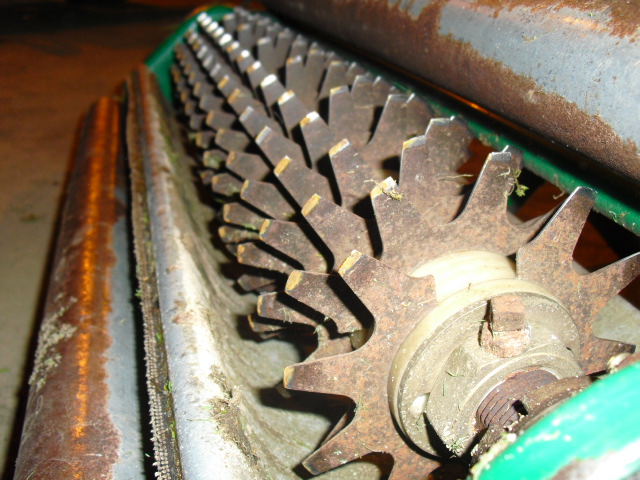

Verti-Cut Reel

Removing some of the lateral plant growth forces the plant to use it's energy elsewhere, that excess energy encourages the grass plant to grow upwards, creating a more upright and dense sward.
Keeping the turf in a more upright position reduces the amount of grass leaf that comes into contact with the ball.  The less contact, friction or drag on the ball, the quicker the golf ball travels across the putting surface.

In good growing conditions we would normally verti-cut every two/three weeks, always avoiding periods when the turf is under stress i.e. when the turf is saturated or in drought or poor growing conditions.
Verti-cutting when prevailing conditions are not suitable or indiscriminately, can cause extensive damage to the crown of the plant, making it more susceptible to wilt and disease.

Cultivation practices such as verti-cutting, will reduce lateral growth, thatch accumulation and improve the uniformity, trueness and speed of  the greens.


More updates to follow in the near future.


Wednesday, 20 April 2011

Springtime at Murrayfield

What a difference a year makes:

This time last year daytime temperatures were struggling to reach double figures and early morning ground frosts were keeping soil temperatures below 5C. 
This year, April, has (so far) been considerably warmer, and soil temperatures are already hovering close to 10 C. 
Without doubt, the course has benefited tremendously from these higher soil temperatures, and compared with this time last year  the condition of the course is significantly advanced.


I have included some photos of the course that were taken earlier today


1st Green Murrayfield


1st Tee & Clubhouse

1st Hole Murrayfield
Colourful 1st Tee Murrayfield
Cherry Trees between 11th & 14th in full blossom

Sunday, 17 April 2011

Chafer Grubs


We have recently noticed an increase in chafer grub activity in some areas of the course, another sure sign that spring has arrived and soil temperatures are rising.

The chafer grubs have spent the winter burrowed deep in the soil, avoiding the cold and winter  frosts, and now, as the soil temperatures improve, they are being found closer to the turf surface.
The chafer grubs are the larvae of the chafer beetle, and primarily feed on the roots of the grass plant, and if not controlled can cause extensive damage to the plant.

The larvae have white bodies curved in the letter  C shape, distinctive reddish brown heads, 3 pairs of legs and are normally about 1.5 cm in length. 

Chafer Grub


The chafer beetles emerge from the turf in the early summer and feed on shrubs and trees before laying their eggs in grassed areas in the late summer. The larvae hatch about 2 weeks later and begin  feeding on grass roots, in the late autumn they move deeper into the soil, where they pass the winter.

If you think you have lawn damage caused by chafer grubs, dig up a small piece of lawn and roots and look for the pest.

Thursday, 14 April 2011

Gorse Management


Last winter we coppiced a number of areas on the course where the gorse had become woody and overgrown, this was done to encourage the gorse to regenerate and produce new healthy and robust plants; in the pictures below you can clearly see the first signs of new growth.


Three months after being coppiced -new growth


New growth from the base of the gorse